The Mission Note
October 30, 2026 · Zachary Marlow

Metamyth is raising $300K on the Mission Note, the first of three levels. Level 2 ($520K) opens when revenue holds at $100K a month, and Level 3 ($900K) once it holds at $200K a month. Investors are repaid from our free cash flow after an 18-month build period, earn the highest return when we grow fastest, and can roll into the commons we are building. Most companies are organizations with a story. Metamyth builds stories with an organization, and this note is repaid from the cash that purpose generates.
How it works
The Mission Note is a demand dividend: it is repaid from free cash flow, the money left after the business runs, so payments rise and fall with how well the business is actually doing. Nothing is owed until operations generate profit, and there is no sale or exit required for investors to get paid.
The return depends on timing. Investors receive a set multiple of their investment that climbs the longer repayment takes, up to a cap. Repaying fast costs us less in total and earns investors a higher annual return, so both sides want the same thing: more demand, sooner.
Proposed terms
These are draft terms for discussion; definitive terms will be set with counsel.
| Term | Proposed |
|---|---|
| Raise | Level 1: $300,000 now |
| Next levels | Level 2: $520,000, opening when trailing three-month revenue reaches $100K a month. Level 3: $900,000, opening at least six months later once it reaches $200K a month. Each level is a separate note on these terms. |
| Minimum investment | Open question |
| Build period | No payments for the first 18 months, while the capital goes to work. Levels 2 and 3 begin repayment 12 months after they arrive. Levels are repaid in order. |
| Payments | Quarterly, at least 40% of free cash flow, rising to 50% once revenue passes $100K a month. We can pay more at any time. |
| Free cash flow | Cash left after operating costs, taxes and an agreed reinvestment budget, paid once the business is profitable overall and keeps a cash cushion |
| Return | A multiple that rises with time, from 1.2× at funding to 1.4× at year 3 and 2.5× at year 10 (schedule below) |
| Cap | 2.5× the investment |
| Early repayment | Allowed at any time, at the multiple for that date |
| Conversion | Holders may roll their outstanding balance into the next round or the commons |
Repayment schedule
The total an investor receives depends on when the note is fully repaid. Between the dates below the multiple rises smoothly; repaying before year 3 costs between 1.2× and 1.4×.
| Fully repaid by | Multiple | Returned per $100K |
|---|---|---|
| Year 3 | 1.4× | $140K |
| Year 5 | 1.7× | $170K |
| Year 7 | 2.0× | $200K |
| Year 10 and after | 2.5× (cap) | $250K |
Because payments flow in steadily from the end of the build period, investors start receiving cash years before the note closes. That lifts their effective annual return above what the multiple alone suggests.
What investors can expect
These figures come from our month-by-month model, built from our current offers and today's pace: how many Adventures and cohort seats Zachary and our guides can carry, who stays on as a member, and later the app and partner ventures, with every team cost, the team profit share and a 30% tax reserve. The full model is a live spreadsheet we share with every investor.
Level 1 on its own, with no further capital:
| Case | Year one revenue | Fully repaid | Total returned | Effective annual return |
|---|---|---|---|---|
| Stretch | $1.36M | About 2.2 years | 1.35× | About 18% |
| Target | $894K | About 3 years | 1.40× | About 16% |
| Floor | $492K | About 5.3 years | 1.75× | About 14% |
The forecast runs three years, as far as a forecast can honestly see. At Stretch, Level 1 is fully repaid inside it, and at Target two months after it closes. At Floor, investors have received about $39K by month 36, and Level 1 is fully repaid about 5.3 years after funding if the trend holds. In our growth plan, a longer scenario with all three levels open, each level repays in about 2 to 3 years at Target and in about 5 to 5.5 years at Floor, at 1.3× to 1.8×. The returns sit close together because payments start after the build period and the multiple rises the longer repayment takes: slower growth pays back later, at a higher multiple.
How it compares
Early-stage equity is slow and usually loses money; this note starts paying cash after the 18-month build and targets a mid-teens annual return.
| Investment | Typical outcome | When cash comes back |
|---|---|---|
| Angel investing | About 70% of investments lose money (Angel Resource Institute, via Bankers Anonymous) | At an exit, if one comes |
| Venture funds | Median net return of 1.4% a year for 2021 funds and 0.7% for 2022 funds (Carta) | About a third of 2021 funds have returned any cash so far |
| The Mission Note | About 16% a year; repaid in about 3 years at Target, 2.2 at Stretch | Quarterly, starting after the 18-month build period |
Venture keeps the possibility of a rare 50–100× winner, which this note caps. The conversion option is how holders reach for that kind of upside here.
What the capital builds
We already have the product and the demand. The capital turns that demand up and builds the system that carries it, so we get profitable at scale.
- $300K · The Engine: first the team, paid properly while we get the whole operation in shape. Then media: organic marketing, storytelling, brand, a designer and a new website, with no ad spend. Everything else builds the system: a researcher and graph engineer, a second developer, a substrate partnership and an AI-powered workflow. A small reserve sits underneath.
- Level 2, $520K · The Community: more guides, the distributed agency, the capital architecture and legal structure for the commons and the federation, and the events and fundraising that carry the larger vision.
- Level 3, $900K · The Game: the full app, which launches nine months after it is funded and opens the door to whole organizations.
Why this size: getting profitable is the responsible way to grow. We raise only what it takes, then raise more from strength through a blended stack of philanthropy, patient long-term capital and aligned investors. The full use of funds is in the forecast.
The door to the commons
The note is the first step toward a larger instrument: a commons that every venture in the Metamyth ecosystem pays into.
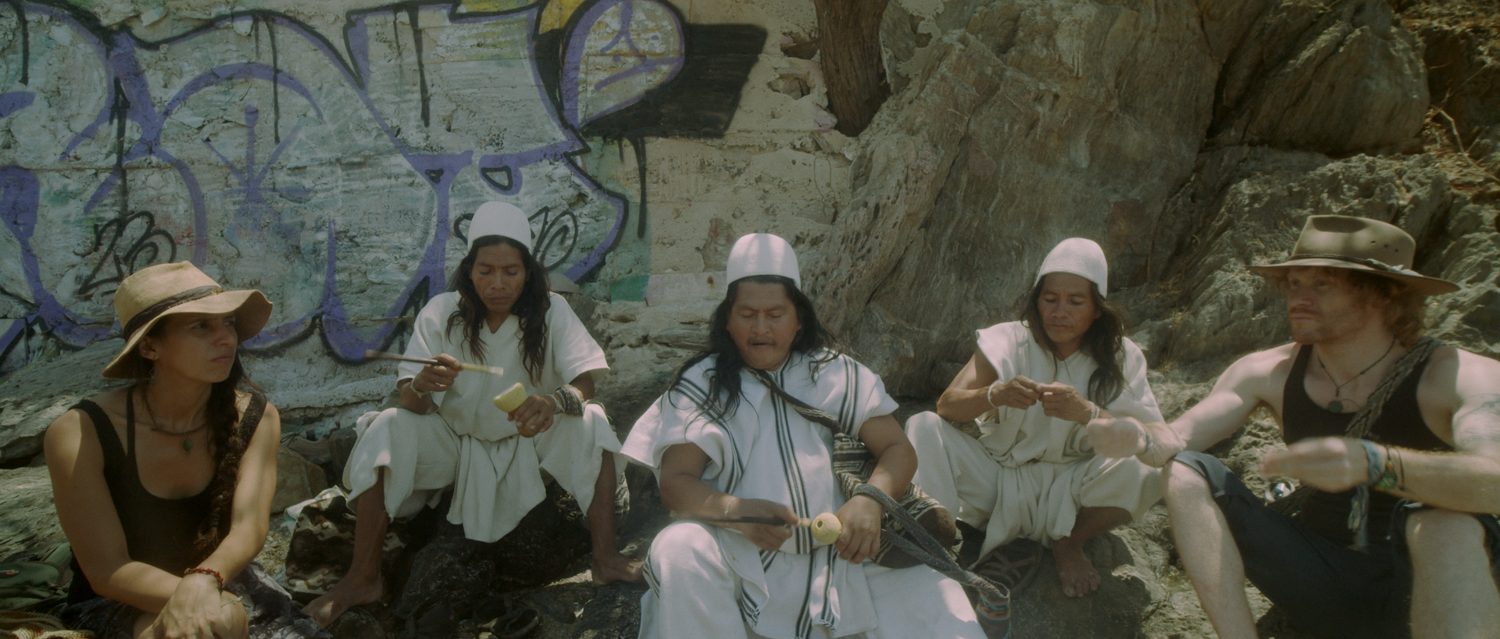
Each venture that comes through the journey will contribute a share of its profit to the collective, stepping up gently as it grows. Investors who have proven to be good partners can convert their note into that commons, holding a stake in the whole ecosystem rather than a single company. Risk is spread and gains compound across many ventures at once, so the upside comes from collective success.
The commons is still being designed and is not part of this offer.
Risks and open terms
Returns are not guaranteed. Here is what could go wrong, in our own words:
- Scaling the magic. The community is what makes the journey work, and scaling it is going to be the hardest part.
- Sales at the close. Almost everyone who meets the journey says they want it, and sales still slip at the close when money comes up.
- The founder bottleneck. Until guides arrive and the team carries the load, the business runs through one storyteller.
- The app. The full app depends on Level 3 and could take longer than planned, which pushes back app revenue and whole-organization work.
If growth comes in below Floor, repayment takes longer, and if the business fails, investors can lose their capital.
Still to settle with counsel and investors:
- The minimum investment
- The exact definition of free cash flow and the reinvestment budget
- Reporting cadence and investor protections
- Conversion terms into the next round and the commons
- The issuing entity
This summary is for discussion with prospective investors and is not an offer to sell securities.